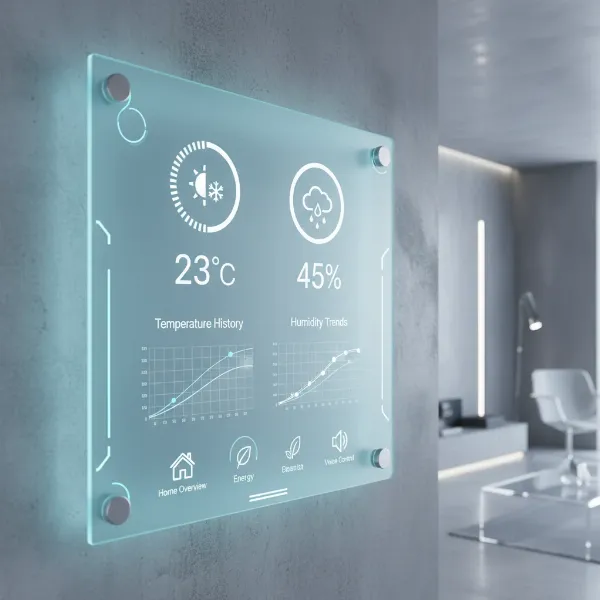
The air we breathe significantly impacts our comfort, health, and even the longevity of our household belongings. Often, we overlook the invisible factor of humidity, which, when imbalanced, can lead to a host of problems from dry skin and respiratory issues to damaged wooden furniture. Understanding and controlling the moisture levels in your home is crucial for creating a truly healthy and comfortable living space. While a digital hygrometer helps you understand your home’s humidity, a humidifier actively adjusts it. This guide will explore the distinct roles of each device, helping you decide which is the right investment for your needs.
What is a Digital Hygrometer and Why Do You Need One?
A digital hygrometer is an instrument specifically designed to measure the amount of water vapor, or relative humidity, in the air. Unlike older analog models, digital hygrometers utilize electronic sensors to provide precise and often instantaneous readings. These modern devices typically display both current humidity and temperature, with some advanced models offering features like min/max memory to track fluctuations over time.
The importance of monitoring humidity cannot be overstated. From a health perspective, maintaining an ideal indoor humidity level (generally between 40-60%) is vital for preventing dry skin, irritated eyes, and issues with respiratory passages. When humidity is too low, it can exacerbate conditions like asthma, allergies, and frequent colds. Conversely, excessively high humidity can foster the growth of mold, mildew, and dust mites, leading to other health concerns. Beyond personal well-being, a digital hygrometer is crucial for preserving your property. Wooden furniture, musical instruments, and even sensitive electronics can be damaged by extreme dryness, leading to cracking, warping, or malfunction. By providing accurate, real-time data, a digital hygrometer empowers you to make informed decisions about your indoor climate, whether that means adjusting your HVAC system or activating a supplemental device.
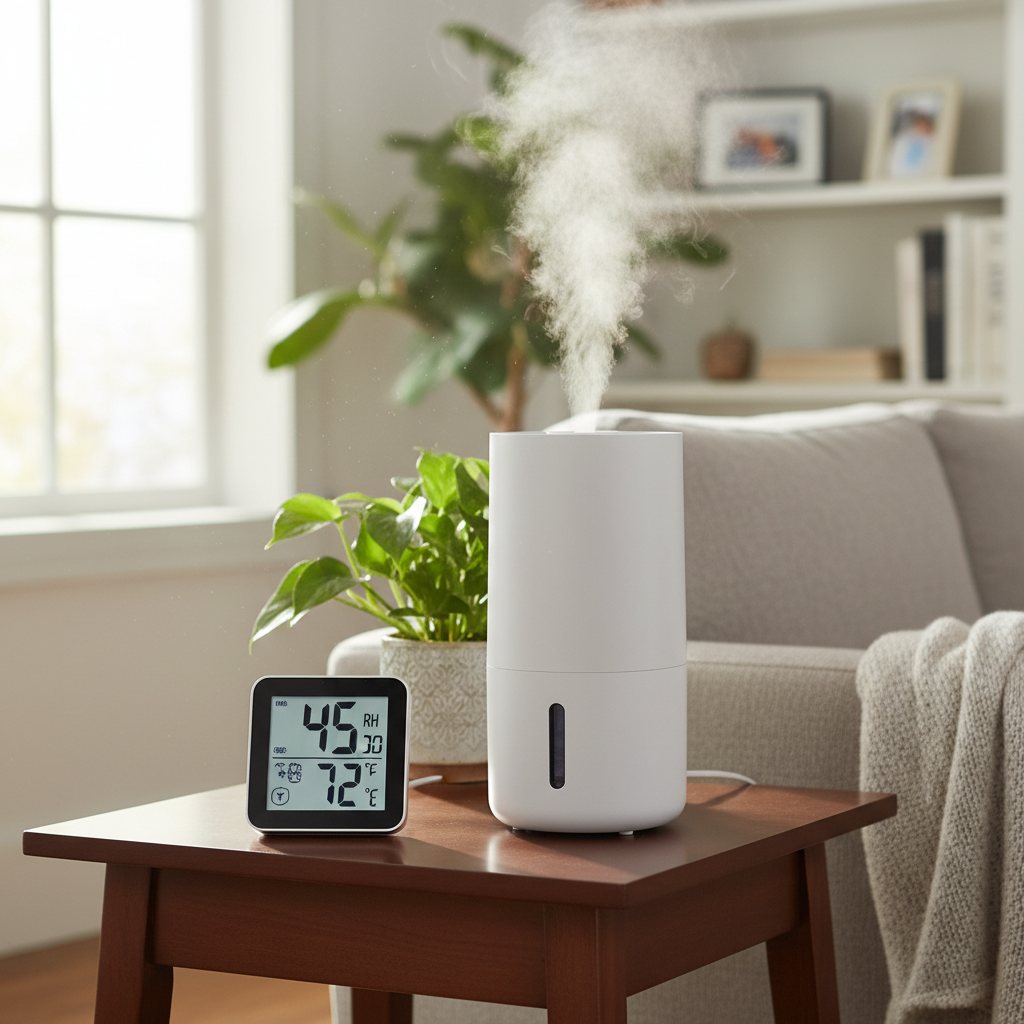
[image-1|digital-hygrometer-overview|A close-up of a modern digital hygrometer displaying humidity and temperature readings on a clear LCD screen, placed on a wooden table in a well-lit living room.|
Close-up shot of a sleek, modern digital hygrometer with an easy-to-read LCD display showing both relative humidity percentage and temperature. The device is situated on a polished wooden surface in a bright, inviting home environment, possibly a living room or office. Soft, natural lighting highlights the digital readouts. Realistic style.]
What is a Humidifier and Why Might You Need One?
In contrast to a hygrometer, a humidifier is an active device designed to add moisture to the air. These appliances work by emitting water vapor or mist into your indoor environment, directly combating the dryness caused by heating systems in winter or air conditioning in summer.
The benefits of increasing air moisture are extensive, touching on both health and home maintenance. For your personal comfort, a humidifier can alleviate common dry air symptoms such as chapped lips, itchy skin, irritated eyes, and a dry throat or nasal passages. It can also be a surprising ally against snoring, as moist air helps to lubricate airways, promoting more restful sleep. Beyond individual comfort, humidifiers play a role in reducing the spread of airborne viruses like influenza, as higher humidity levels can inhibit their survival. For your home, adequate humidity is a safeguard for wooden items—from floors and furniture to musical instruments—preventing them from drying out, cracking, or warping. Some people also find that a more humid environment feels warmer, potentially allowing them to set thermostats lower and save on heating costs. Various types of humidifiers exist, including ultrasonic, evaporative, and steam vaporizers, each with different mechanisms for dispersing moisture into the air.
Key Differences: Digital Hygrometer vs. Humidifier
While both devices are concerned with indoor humidity, their fundamental functions are distinct. The core difference lies in their purpose: a digital hygrometer is a monitoring tool, while a humidifier is an active adjustment tool.
A digital hygrometer provides you with information; it measures and displays the current relative humidity and often the temperature, giving you insight into your environment. It is a passive device, meaning it simply reports conditions without altering them. You consult a hygrometer to know the humidity level, which then informs your decision-making. On the other hand, a humidifier actively changes the humidity level by adding moisture to the air. It is a solution provider, directly addressing dry conditions. Think of it this way: a hygrometer is like a thermometer for humidity, telling you how humid it is, while a humidifier is like an air conditioner for humidity, making it more humid. Some humidifiers, particularly more advanced models, may include a built-in humidistat, which is a controller that works like a thermostat for humidity. A humidistat measures the humidity (acting like a basic hygrometer) and automatically turns the humidifier on or off to maintain a pre-set humidity level.
When to Choose a Digital Hygrometer
Deciding when a digital hygrometer is your primary need revolves around whether your goal is to simply understand or to actively change your air quality. You should choose a digital hygrometer if your main objective is to monitor existing humidity levels without adding moisture. This is especially vital when you need to confirm the efficacy of other climate control systems in your home, such as your HVAC unit or an existing humidifier, ensuring they are operating within optimal ranges.
For hobbyists and collectors, a digital hygrometer is indispensable. If you own valuable items sensitive to moisture, such as cigars, musical instruments, artwork, or certain collectibles, precise humidity monitoring is critical to their preservation. It allows you to protect your investments from both excessive dryness and harmful dampness. Furthermore, if you are simply aiming for general awareness of your home’s climate, a standalone digital hygrometer offers an accurate, low-maintenance way to keep tabs on indoor conditions, helping you determine if and when further action, such as using a humidifier, might be necessary.
[image-2|digital-hygrometer-monitoring-plants|A digital hygrometer placed among lush houseplants in a home, displaying healthy humidity levels for plant growth. Soft, indirect natural light streams into the room.|
A digital hygrometer strategically positioned amidst a vibrant collection of indoor plants, showcasing its role in monitoring an optimal growing environment. The scene is bright and airy, with soft, indirect sunlight filtering in through a window. The hygrometer’s display is clearly visible, indicating balanced humidity and temperature. Realistic and inviting style.]
When to Choose a Humidifier
A humidifier becomes essential when monitoring reveals that your indoor air is consistently too dry, and you need an active solution to introduce moisture. This is often the case during colder months when heating systems strip moisture from the air, or in dry climates, or even with constant air conditioning use in humid regions.
You should consider investing in a humidifier if you or your family members frequently experience symptoms associated with dry air, such as dry, itchy skin, chapped lips, irritated nasal passages, or persistent coughs. Individuals prone to allergies or sinus issues may find significant relief as increased humidity helps to soothe airways and loosen congestion. For those who snore, a humidifier can create a more comfortable sleep environment by preventing the drying out of the throat. Moreover, if you notice your wooden floors, furniture, or musical instruments showing signs of drying out—like slight cracks or warping—a humidifier can help restore and maintain the optimal moisture content needed for their longevity. Essentially, if the problem is a lack of moisture in the air, a humidifier is the direct remedy to improve comfort, protect health, and preserve your belongings.
Factors to Consider When Buying
Selecting the right device—or combination of devices—requires thoughtful consideration of several factors to ensure it meets your specific needs.
For digital hygrometers, accuracy is paramount; look for models that promise a margin of error within 1-2% relative humidity. Features such as integrated temperature sensors, min/max readings, backlighting for easy visibility, and smart connectivity for remote monitoring can enhance usability. Calibration is less frequently required for digital models compared to analog, but it’s good to know if the option exists.
When choosing a humidifier, consider the room size or area it needs to cover, as models are rated for different capacities (e.g., single room, medium room, whole house). Look for beneficial features like an auto shut-off for safety when the water tank is empty, a built-in humidistat for automatic humidity control, and various mist settings (cool mist, warm mist). Quiet operation is a significant factor, especially if used in bedrooms. Consider if it requires filters and how often they need replacement, as this impacts ongoing cost and maintenance. Smart features, such as app control and integration with smart home systems, can offer convenience. Your budget will also play a role, as prices vary widely based on size, features, and brand reputation for both hygrometers and humidifiers.
| Feature | Digital Hygrometer | Humidifier |
|---|---|---|
| Primary Function | Measures Relative Humidity | Adds Moisture to Air |
| Purpose | Monitor, Inform | Adjust, Solve Dry Air Problems |
| Active/Passive | Passive (reads only) | Active (releases water vapor) |
| Power Source | Batteries (typically) | Wall outlet (typically) |
| Output | Numerical display (RH%, Temp) | Mist/Steam, increased ambient humidity |
| Key Benefit | Awareness, Protection of sensitive items, health insight | Health, Comfort, Property Preservation |
| Integrated with | Sometimes with Thermometer | Often with built-in humidistat and hygrometer |
How to Use and Maintain Both Devices
Proper usage and regular maintenance are crucial for the longevity and effectiveness of both your digital hygrometer and humidifier.
For your digital hygrometer, placement is key to accurate readings. Position it in a central part of the room, away from direct sunlight, heating or cooling vents, windows, and exterior walls, as these locations can provide skewed measurements. While most digital hygrometers come pre-calibrated and maintain accuracy, some advanced models might offer a calibration option, often using a simple salt solution test if you suspect discrepancies. Regular battery replacement is the main maintenance task for most battery-powered digital models.
Humidifiers require more active maintenance due to their water components. Placement should be on a stable, elevated surface in a central location, ideally a few feet away from walls, furniture, and electronics to prevent moisture damage. The most critical maintenance task is cleaning. You should change the water daily to prevent stagnation and bacterial growth, and perform a thorough cleaning and disinfection at least once a week. This typically involves rinsing the tank, using a vinegar or bleach solution to remove mineral buildup and kill germs, and cleaning any filters or wicks according to manufacturer instructions. Using distilled water instead of tap water can significantly reduce mineral dust buildup (white residue) and extend the life of the unit. Ensure filters are replaced as recommended to maintain air quality and efficiency.
[image-3|humidifier-maintenance-cleaning|A person carefully cleaning the water tank of a humidifier, emphasizing hygiene and maintenance to prevent mold. The setting is a clean bathroom or utility sink, with soft, practical lighting.|
A person’s hands are shown meticulously cleaning the water tank of a humidifier, illustrating the importance of regular maintenance. The scene is set in a well-lit, clean bathroom or utility area, focusing on the act of cleaning with a sponge and cleaning solution to prevent mold and bacteria buildup. Realistic, instructional style.]
Common Mistakes and How to Avoid Them
Even with the best intentions, users can make common errors that diminish the effectiveness or even lead to problems with their digital hygrometers and humidifiers. Being aware of these pitfalls can help you avoid them.
For digital hygrometers, the most frequent mistake is poor placement. Placing the device too close to a heat source, a drafty window, or directly in sunlight can lead to inaccurate readings, causing you to misunderstand your home’s actual humidity levels. Always place it in the center of the area you wish to measure. Another less common mistake for digital models is neglecting to check its accuracy over time, though modern digital units are generally very reliable and rarely require user calibration.
With humidifiers, several common mistakes can arise. Over-humidifying is a significant issue; maintaining humidity levels consistently above 60% can create an environment ripe for mold and mildew growth, dust mites, and even structural damage to your home. Always use your humidifier in conjunction with a hygrometer or rely on a built-in humidistat to stay within the recommended 40-60% range. Another major oversight is neglecting regular cleaning. Stagnant water in the tank can become a breeding ground for bacteria and mold, which are then released into the air, potentially causing respiratory issues. Adhere strictly to the manufacturer’s cleaning schedule. Lastly, using tap water can lead to “white dust” (mineral deposits) being dispersed into the air, which can settle on surfaces and be inhaled. Opting for distilled or demineralized water can mitigate this problem.
Conclusion
Navigating the world of indoor climate control can seem complex, but understanding the distinct roles of a digital hygrometer and a humidifier simplifies the process significantly. A digital hygrometer is your eyes and ears, providing crucial data about your home’s humidity levels, informing you when conditions are suboptimal for your health or property. A humidifier, on the other hand, is your active solution, directly adding moisture to the air to combat dryness and create a more comfortable, healthier environment. These two devices often work best in tandem, with the hygrometer guiding the use of the humidifier to maintain ideal conditions. By choosing the right tool for the job—whether it’s monitoring, actively adjusting, or both—you can confidently achieve optimal indoor air quality. Which device will bring the most balance to your indoor environment?
Câu Hỏi Thường Gặp
What is the ideal indoor humidity level?
|
Our Picks for the Best Digital hygrometer in 2026
As an Amazon Associate I earn from qualifying purchases.
|
||
| Num | Product | Action |
|---|---|---|
| 1 | Humidity Meter Indoor Thermometer 6-Pack Mini Digital Thermometer Hygrometer Indoor Temperature Humidity Meters Gauge LCD Display Fahrenheit (℉) for Greenhouse, Reptile Tank, Cellar, Closet |

|
| 2 | TempPro TP50 2 Pieces Digital Hygrometer Indoor Thermometer Room Thermometer and Humidity Gauge with Temperature Humidity Monitor(Previously ThermoPro) |
|
| 3 | TempPro TP49 3 Pieces Digital Hygrometer Indoor Thermometer Humidity Meter Mini Hygrometer with Temperature and Humidity Monitor Outdoor and Room Thermometer Weather Station (Previously ThermoPro) |
|
| 4 | JEDEW 4 Pack Hygrometer Thermometer Digital Humidity Meter Indoor/Outdoor Humidity Monitor Reptile Thermo-Hygrometer for Greenhouse Humidors Terrarium Jars, Fahrenheit (℉) /Celsius(℃) (4) |
|
| 5 | Mini Hygrometer Thermometer Digital Humidity Meter Indoor/Outdoor Humidity Monitor Reptile Thermometer for Greenhouse Garden Cellar Fahrenheit(℉)/ Celsius(℃) 2 Pack |
|
| 6 | JEDEW 2 Pack Hygrometer Thermometer Digital Humidity Meter Indoor/Outdoor Humidity Monitor Reptile Thermo-Hygrometer for Greenhouse Humidors Terrarium Jars, Fahrenheit (℉) /Celsius(℃) (2) |
|
| 7 | Govee Bluetooth Hygrometer Thermometer, Large LCD, Max/Min Records, 2-Year Data Storage - Black, 2 Pack |
|
| 8 | TempPro TP49 Digital Hygrometer Indoor Thermometer Humidity Meter Room Thermometer with Temperature and Humidity Monitor Mini Hygrometer Outdoor Thermometer (Previously ThermoPro) |
|
| 9 | TempPro TP50 Digital Hygrometer Indoor Thermometer Room Thermometer and Humidity Gauge with Temperature Humidity Monitor(Previously ThermoPro) |
|
| 10 | 6-Pack Mini Hygrometer Indoor Humidity Meter, Mini Digital Thermometer Humidity Gauge Meter, Indoor Thermometer Hygrometer Monitor Fahrenheit (℉) for Reptile Thermostat, Jars Reptile, Fridge |
|
The generally recommended indoor humidity level for optimal health, comfort, and property preservation is between 40% and 60% relative humidity. Maintaining this range helps prevent issues like dry skin and respiratory problems while also deterring mold growth and protecting wooden items.
Can a humidifier also act as a hygrometer?
Some advanced humidifiers come with a built-in humidistat, which includes a basic hygrometer function. This allows the humidifier to measure the current humidity and automatically turn on or off to maintain a set level. However, a dedicated digital hygrometer often provides more accurate readings and additional features like temperature display or min/max tracking.
How often should I clean my humidifier?
For hygienic operation, it is recommended to change the water in your humidifier daily. A thorough cleaning and disinfection, usually with a vinegar or bleach solution, should be performed at least once a week to prevent the buildup of bacteria, mold, and mineral deposits, ensuring the release of clean mist.
Where is the best place to put a digital hygrometer?
Place your digital hygrometer in a central location within the room you wish to monitor, at a comfortable viewing height. Avoid placing it near direct sunlight, heating or cooling vents, windows, exterior walls, or directly next to a humidifier, as these spots can provide inaccurate or localized readings.
Can too much humidity be harmful?
Yes, excessive humidity (above 60-70% relative humidity) can be harmful. High moisture levels create an ideal environment for mold, mildew, and dust mites to flourish, which can exacerbate allergies and respiratory issues. It can also lead to condensation on surfaces and potential damage to walls, furniture, and electronics over time.
Do digital hygrometers need calibration?
Most modern digital hygrometers are factory-calibrated and maintain a high degree of accuracy over their lifespan, often not requiring user calibration. However, if you suspect your device is providing inaccurate readings, some models offer a simple salt solution test to check and adjust their calibration.
Are humidifiers safe for babies?
When used correctly and maintained diligently, humidifiers can be safe and beneficial for babies, especially to alleviate congestion or dry skin. Always use cool mist humidifiers for children’s rooms to eliminate burn risks, clean the unit frequently to prevent germ buildup, and monitor humidity levels to avoid over-humidifying.