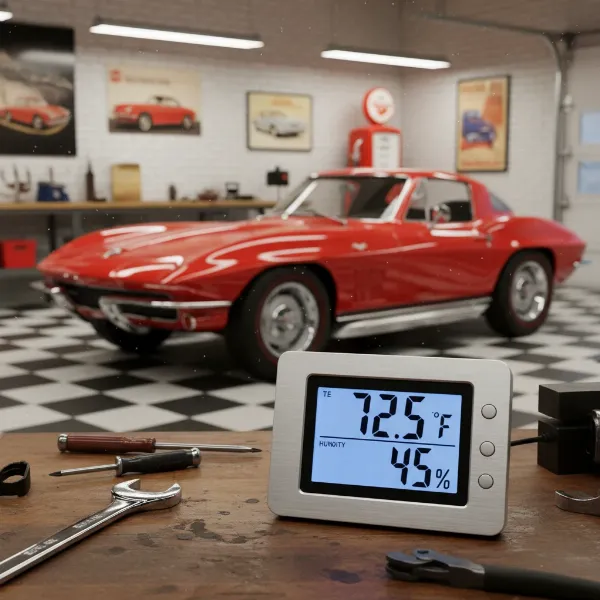
In our increasingly connected world, maintaining optimal indoor humidity is more important than ever. From safeguarding expensive cigars and musical instruments to protecting your family’s health and preventing mold, accurate humidity monitoring is a vital tool. Yet, navigating the options can be confusing: should you rely on a traditional digital hygrometer with a clear display, or embrace the convenience of app-based trackers that promise remote insights? This article delves into the functionality, benefits, and limitations of each to help you choose the ultimate humidity monitoring solution for your unique needs.
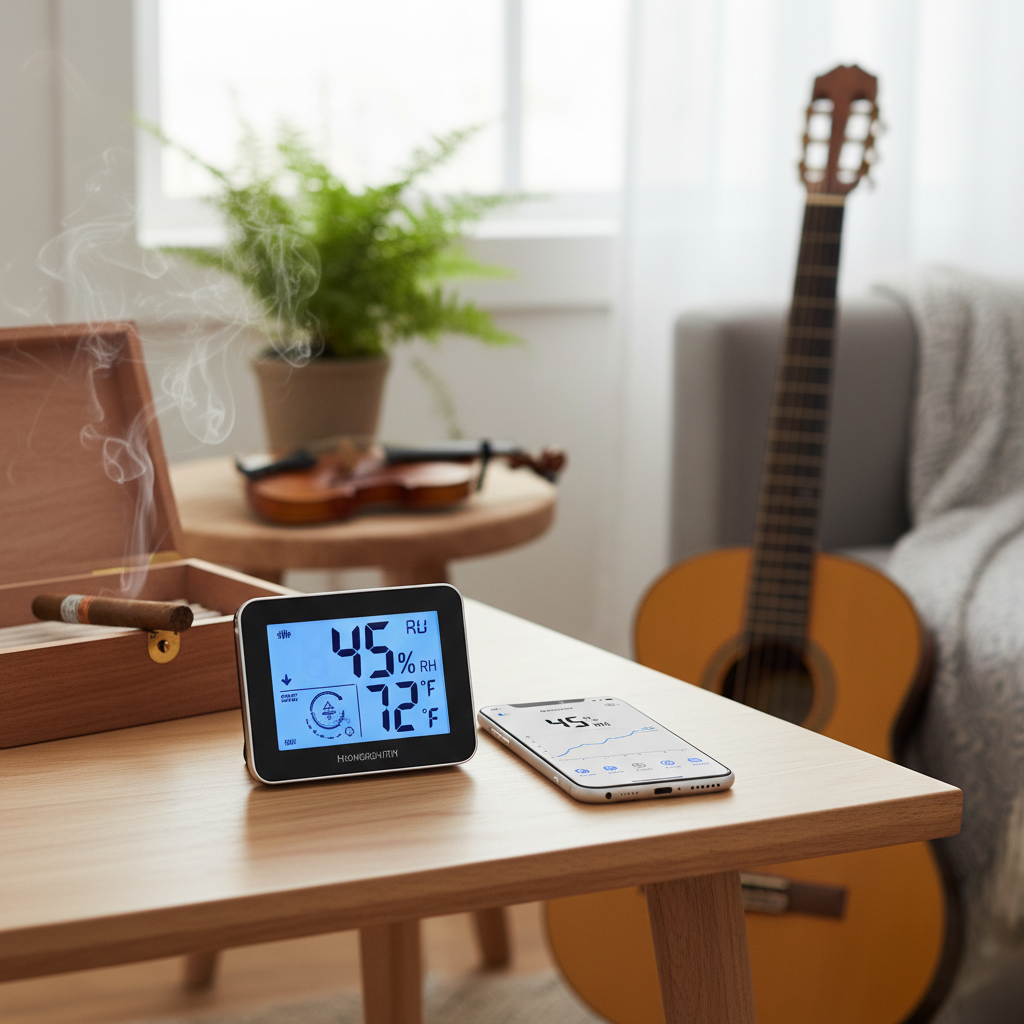
Understanding Digital Hygrometers: Core Functionality and Importance
A digital hygrometer is an electronic device designed to measure the amount of moisture, or water vapor, present in the air. Unlike older analog models, these devices utilize advanced electronic sensors and microprocessors to detect changes in relative humidity (RH) and display the readings as clear digital numbers on an LCD screen. Many models also incorporate a thermometer, showing both temperature and humidity simultaneously.
The importance of precise humidity measurement extends across various aspects of daily life. In your home, maintaining humidity levels between 40-60% RH can significantly improve comfort, alleviate respiratory issues, and reduce the likelihood of mold and mildew growth. For enthusiasts, meticulous humidity control is essential for preserving valuable items like cigars, wines, and wooden instruments, preventing damage such as cracking, warping, or deterioration. Digital hygrometers provide the accurate, real-time data needed to take informed action and maintain a healthy, protected environment.
The Rise of App-Based Humidity Tracking: Connectivity and Insights
Beyond standalone devices, the landscape of humidity monitoring has expanded with the advent of app-based trackers. These systems typically consist of external sensors that wirelessly transmit humidity and temperature data to a smartphone or tablet application via technologies like Bluetooth, Wi-Fi, or Zigbee. This connectivity is their primary appeal, offering users unprecedented convenience and deeper insights.
App-based trackers empower users with remote monitoring capabilities, allowing them to check environmental conditions from anywhere with an internet connection. They excel at data logging, compiling historical readings into graphs and charts, which can reveal trends and patterns over time. Many also feature customizable alerts, notifying you instantly if humidity levels fall outside your desired range, prompting timely intervention. Furthermore, some integrate seamlessly with smart home ecosystems, enabling automation—such as triggering a smart plug to activate a humidifier or dehumidifier when needed.
[image-1|smart-home-humidity-monitor|Smart home humidity monitor displaying data on a phone app with a sensor icon|
A modern smartphone screen displaying a sleek mobile application for smart home humidity monitoring. The app shows real-time temperature and humidity readings, historical data graphs, and an alert notification, with a small, discreet wireless sensor icon in the foreground. The background is a blurred living room scene, emphasizing connectivity and convenience, in a realistic, editorial style.]
A Spectrum of Devices: From Standalone to Fully Integrated
The world of humidity measurement offers a range of devices, each catering to different preferences and technical requirements. Understanding these distinctions is key to selecting the best fit.
Standalone Digital Hygrometers
|
Our Picks for the Best Digital hygrometer in 2026
As an Amazon Associate I earn from qualifying purchases.
|
||
| Num | Product | Action |
|---|---|---|
| 1 | JEDEW 4 Pack Hygrometer Thermometer Digital Humidity Meter Indoor/Outdoor Humidity Monitor Reptile Thermo-Hygrometer for Greenhouse Humidors Terrarium Jars, Fahrenheit (℉) /Celsius(℃) (4) |

|
| 2 | 6-Pack Mini Hygrometer Indoor Humidity Meter, Mini Digital Thermometer Humidity Gauge Meter, Indoor Thermometer Hygrometer Monitor Fahrenheit (℉) for Reptile Thermostat, Jars Reptile, Fridge |
|
| 3 | Humidity Meter Indoor Thermometer 6-Pack Mini Digital Thermometer Hygrometer Indoor Temperature Humidity Meters Gauge LCD Display Fahrenheit (℉) for Greenhouse, Reptile Tank, Cellar, Closet |
|
| 4 | TempPro TP49 Digital Hygrometer Indoor Thermometer Humidity Meter Room Thermometer with Temperature and Humidity Monitor Mini Hygrometer Outdoor Thermometer (Previously ThermoPro) |
|
| 5 | TempPro TP49 3 Pieces Digital Hygrometer Indoor Thermometer Humidity Meter Mini Hygrometer with Temperature and Humidity Monitor Outdoor and Room Thermometer Weather Station (Previously ThermoPro) |
|
| 6 | JEDEW 2 Pack Hygrometer Thermometer Digital Humidity Meter Indoor/Outdoor Humidity Monitor Reptile Thermo-Hygrometer for Greenhouse Humidors Terrarium Jars, Fahrenheit (℉) /Celsius(℃) (2) |
|
| 7 | Govee Bluetooth Hygrometer Thermometer, Large LCD, Max/Min Records, 2-Year Data Storage - Black, 2 Pack |
|
| 8 | TempPro TP50 2 Pieces Digital Hygrometer Indoor Thermometer Room Thermometer and Humidity Gauge with Temperature Humidity Monitor(Previously ThermoPro) |
|
| 9 | Mini Hygrometer Thermometer Digital Humidity Meter Indoor/Outdoor Humidity Monitor Reptile Thermometer for Greenhouse Garden Cellar Fahrenheit(℉)/ Celsius(℃) 2 Pack |
|
| 10 | TempPro TP50 Digital Hygrometer Indoor Thermometer Room Thermometer and Humidity Gauge with Temperature Humidity Monitor(Previously ThermoPro) |
|
These are the most straightforward digital devices, featuring an integrated sensor and a clear LCD display. They are self-contained units that provide immediate, direct readings without the need for an external app or connection. Their primary advantage lies in their simplicity and local readability. You can glance at the display at any time for current conditions, making them ideal for monitoring critical microclimates where immediate visual confirmation is preferred, such as in a cigar humidor, a musical instrument case, or a plant terrarium. However, they typically lack remote monitoring capabilities or historical data logging.
Smart Digital Hygrometers (App-Enabled with Display)
Bridging the gap between traditional and connected, smart digital hygrometers offer the best of both worlds. These devices still feature an onboard LCD display for local readings but also include Bluetooth or Wi-Fi connectivity to sync data with a smartphone app. This dual functionality provides the convenience of a quick visual check while also offering the advanced features of app-based tracking, such as remote monitoring, data logging, and customizable alerts. They are an excellent choice for users who desire both immediate local feedback and the analytical power of historical data.
Dedicated App-Only Sensors
These are often small, discreet sensors that lack a physical display and rely entirely on an app for reading and configuration. They are designed for situations where the sensor needs to be placed inconspicuously or in hard-to-reach areas, transmitting data wirelessly to your smartphone. While they don’t offer direct visual feedback, their strength lies in their focus on deep data features, integration into smart home systems, and unobtrusive placement. These sensors often boast extended battery life (especially Bluetooth Low Energy models) and can be part of a multi-sensor network, providing comprehensive coverage across a large space or multiple rooms.
Digital Hygrometer vs. App Trackers: A Head-to-Head Comparison
When deciding between a digital hygrometer and an app-based tracker, several critical factors come into play.
Accuracy and Reliability
For crucial applications, accuracy is paramount. Dedicated digital hygrometers and high-quality external app-enabled sensors generally offer high precision, often within ±1-3% RH. It’s important to note that relying solely on a smartphone’s internal sensors for humidity measurement is highly unreliable, as these are typically designed for general weather forecasts, not specific microclimate monitoring. Quality external sensors, whether standalone or app-connected, provide superior accuracy for localized readings. Regular calibration, often through a simple salt test, is essential for maintaining reliability over time for any device.
Real-Time Monitoring vs. Data Logging
Standalone digital hygrometers provide instant, real-time readings directly on their display. This is invaluable for immediate visual checks. App-based trackers, on the other hand, excel at data logging, creating historical graphs and charts of humidity fluctuations. This allows you to identify trends, pinpoint problem areas, and assess the effectiveness of adjustments over hours, days, or even months. While smart digital hygrometers offer both, pure app-only sensors specialize in the comprehensive historical data analysis.
User Experience and Convenience
The user experience differs significantly. Standalone digital hygrometers offer straightforward operation with clear LCD readouts. They are easy for anyone to pick up and understand. App-based trackers provide a more interactive and feature-rich interface through your smartphone. This allows for personalized settings, advanced alerts, and a deeper dive into data, but it requires a smartphone and familiarity with the app.
Placement Flexibility and Range
Both standalone and app-enabled sensors offer excellent placement flexibility, allowing you to position the device precisely where humidity monitoring is critical. However, app trackers introduce range considerations based on their connectivity. Bluetooth sensors typically have a shorter range (5-30 meters) and can be affected by physical barriers like thick walls, but they are very power-efficient. Wi-Fi sensors offer a greater range and coverage area, suitable for larger homes or multi-floor environments, often with better data security, but they consume more power, leading to shorter battery life. Zigbee sensors balance power efficiency and range but require a separate hub.
Cost and Maintenance
The initial investment for both types can vary widely, from affordable consumer models to high-end professional-grade units. App-based systems may incur additional costs if a dedicated hub is required (e.g., for some Wi-Fi or Zigbee sensors). In terms of maintenance, most digital hygrometers and wireless sensors run on batteries, which will need periodic replacement. Bluetooth sensors generally boast longer battery life than Wi-Fi counterparts due to lower power consumption. Calibration is a common maintenance task for both to ensure continued accuracy.
Advanced Features and Smart Home Integration
App-based trackers undoubtedly win in the realm of advanced features and smart home integration. They offer custom threshold alerts, allowing you to receive notifications when humidity deviates from your set parameters. Many can integrate with smart home platforms like Amazon Alexa or Google Home, enabling automation of humidifiers, dehumidifiers, or ventilation systems based on real-time data. Some also support multiple sensors connected to a single app, providing a holistic view of environmental conditions across your entire property.
“For precise microclimate control, like in specialized environments, the rapid response and direct display of a standalone digital hygrometer often provide an edge. However, for comprehensive historical analysis and remote oversight, app-enabled solutions offer unparalleled insights.” – Dr. Eleanor Vance, Environmental Scientist
Choosing Your Optimal Humidity Monitoring Solution
The best choice ultimately depends on your specific needs, environment, and how you prefer to interact with your data.
When to Choose a Standalone Digital Hygrometer
Opt for a standalone digital hygrometer if:
- You need immediate, visual feedback without relying on a smartphone.
- You’re monitoring a critical microclimate like a cigar humidor, guitar case, or reptile enclosure where precise, localized readings are paramount.
- Your primary concern is accuracy for a single location.
- You prefer a budget-friendly and straightforward device with minimal setup.
- You have limited or no access to Wi-Fi or reliable Bluetooth connectivity in the monitoring area.
When to Opt for App-Based Tracking
Embrace app-based tracking if:
- You require remote monitoring capabilities to check conditions from anywhere.
- You want to track historical data, identify trends, and analyze humidity over time.
- You need customizable alerts to proactively address humidity issues.
- You want to integrate humidity monitoring into your smart home system for automation.
- You’re monitoring multiple locations and want to manage all data through a single interface.
- Discreet sensor placement is a priority, without the need for a constant physical display.
The Hybrid Advantage
For many, the ideal solution lies in a hybrid approach. Many modern “smart digital hygrometers” offer both a local display and app connectivity. This allows for the convenience of a quick glance at the device itself while also providing the robust features of remote monitoring, data logging, and smart home integration through an associated app. This combination ensures you’re always informed, whether you’re nearby or miles away.
[image-2|humidity-control-greenhouse|Digital hygrometer monitoring humidity in a greenhouse|
A close-up shot of a small, modern digital hygrometer with a clear LCD screen displaying humidity and temperature readings, placed among vibrant green plants inside a miniature indoor greenhouse or terrarium. The lighting is soft and natural, highlighting the device’s role in maintaining optimal plant growing conditions, in a realistic, editorial product photography style.]
Best Practices for Effective Humidity Monitoring
Regardless of the device you choose, maximizing its effectiveness requires adherence to a few best practices.
First, optimal placement is crucial. For general room humidity, place the hygrometer or sensor in a central location, away from direct sunlight, drafts, heat sources, or air conditioning vents, which can skew readings. For specific items like plants or cigars, place the sensor as close as possible to the items being monitored to capture the actual microclimate. For instance, in a plant terrarium, position the sensor at canopy level, not on a shelf or windowsill.
Second, periodic calibration is vital for maintaining accuracy. Even high-quality digital sensors can drift over time. A common and effective method is the salt test: place the hygrometer/sensor with a small, open container of saturated salt solution in a sealed bag for 8-12 hours. The humidity inside the bag should stabilize at a known percentage (e.g., 75% RH at room temperature), allowing you to check and adjust your device’s reading if necessary. Perform this at least once or twice a year, or whenever you suspect inaccuracies.
Finally, battery management is a simple but important aspect of maintenance. For battery-powered devices, regularly check battery levels and replace them before they run out, especially for app-based sensors where silent failure can lead to undetected issues. For Wi-Fi sensors, be aware of their higher power consumption compared to Bluetooth and plan replacements accordingly.
Conclusion
The debate between traditional digital hygrometers and advanced app-based trackers isn’t about one being inherently “better” than the other; rather, it’s about identifying which solution best aligns with your specific monitoring needs. Standalone digital hygrometers offer reliable, immediate visual feedback, ideal for critical localized measurements. App-based trackers, with their remote monitoring, comprehensive data logging, and smart home integration, provide a powerful tool for proactive management and trend analysis. Many modern solutions offer a harmonious blend of both, ensuring you have constant visibility into your environment. By understanding their distinct strengths and employing best practices, you can choose the right digital hygrometer or app-based system to create optimal humidity conditions, protecting your health, property, and peace of mind. Which approach will you integrate into your space to master environmental control?
Câu Hỏi Thường Gặp
Can a phone’s internal sensor accurately measure room humidity?
No, a phone’s internal sensors are generally unreliable for accurate room humidity measurement. They are designed for broader weather forecasting or atmospheric pressure, not for monitoring localized microclimates within your home. Dedicated digital hygrometers or external app-enabled sensors provide far more precise and actionable data.
How often should I calibrate my digital hygrometer or sensor?
It is recommended to calibrate your digital hygrometer or sensor at least once or twice a year to ensure continued accuracy. For critical applications, or if you notice inconsistent readings, more frequent calibration using a salt test or another reliable method is advisable.
Do all app-based humidity trackers require a hub?
Not all app-based humidity trackers require a hub. While some, particularly those using Zigbee or certain Wi-Fi protocols, do need a compatible hub for operation, many Bluetooth Low Energy (BLE) and some Wi-Fi sensors can connect directly to your smartphone or home Wi-Fi network without an additional hub.
What is the ideal humidity range for a home?
The ideal relative humidity range for most indoor environments, including homes, is typically between 40% and 60%. Maintaining humidity within this range helps to improve comfort, minimize the growth of mold and mildew, reduce dust mites, and protect wooden furniture and other sensitive items.
Can app-based trackers help with mold prevention?
Yes, app-based humidity trackers can be highly effective for mold prevention. By providing real-time data, historical trends, and customizable alerts when humidity levels rise above safe thresholds, they enable you to proactively address excessive moisture and take corrective actions before mold and mildew have a chance to grow.