Understanding the environment around us is more critical than ever, influencing everything from our health and comfort to the longevity of our cherished possessions. When it comes to monitoring indoor conditions, two instruments often come to mind: digital hygrometers and liquid thermometers. While both aim to provide insight into our surroundings, they measure distinctly different environmental factors and operate on fundamentally different principles. Confusion between these tools can lead to suboptimal environmental control, impacting well-being and the preservation of sensitive items. This comprehensive guide will demystify digital hygrometers and liquid thermometers, comparing their functions, mechanisms, benefits, and ideal applications, empowering you to choose the right tool for your specific needs.
Decoding Environmental Measurements: Humidity vs. Temperature
Before delving into the specifics of each device, it’s essential to clarify the two primary environmental metrics they address: humidity and temperature. Temperature, a measure of heat intensity, directly affects our comfort and the physical state of materials. High temperatures can cause discomfort, while extreme lows can lead to freezing and damage.
Humidity, specifically relative humidity (RH), quantifies the amount of water vapor present in the air compared to the maximum amount it could hold at a given temperature. It’s a crucial factor for various aspects of daily life. For instance, excessively dry air can cause skin irritation, respiratory issues, and damage to wooden furniture, musical instruments, and electronic components. Conversely, high humidity promotes mold growth, dust mites, and can even contribute to structural damage in buildings, making its accurate measurement as vital as temperature.
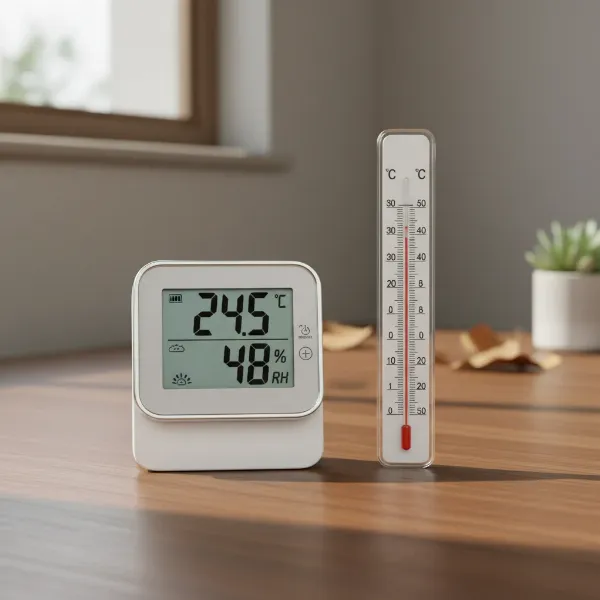 Digital Hygrometer and Liquid Thermometer side-by-side on a desk, illustrating their different displays and forms, emphasizing environmental monitoring.
What is a Digital Hygrometer? Understanding Modern Humidity Sensing
A digital hygrometer is an electronic instrument designed to measure the amount of moisture, or relative humidity, in the air. Unlike older mechanical counterparts, these devices utilize advanced electronic sensors to provide precise, real-time data. Typically, digital hygrometers employ either capacitive or resistive sensors. These sensors contain a small, moisture-absorbent material through which an electrical current flows. As the surrounding air’s humidity changes, this material absorbs or releases moisture, altering its electrical properties (capacitance or resistance). A sophisticated microchip inside the device then interprets these changes, converting them into an accurate digital humidity reading, often displayed as a percentage.
The importance of accurately measuring humidity cannot be overstated. Maintaining optimal humidity levels is a crucial safeguard for health, comfort, and the preservation of sensitive materials. For human comfort and well-being, relative humidity levels between 40% and 60% are often recommended. Deviations can exacerbate respiratory conditions, impact sleep quality, and even affect our perceived thermal comfort. Beyond personal comfort, proper humidity control is vital for protecting cherished items like wooden furniture, musical instruments, artwork, and electronics from warping, cracking, or corrosion. In industrial settings, laboratories, and specialized storage areas such as cigar humidors or wine cellars, precise humidity monitoring prevents oxidation, static discharge, mold growth, and component degradation, ensuring product integrity and operational efficiency.
Exploring Liquid Thermometers: Traditional Temperature Measurement
Liquid thermometers, often referred to as liquid-in-glass thermometers, are traditional instruments whose sole purpose is to measure temperature. These devices operate on the fundamental principle of thermal expansion. They typically consist of a sealed glass tube with a bulb at one end, containing a specific liquid such as mercury or alcohol (often dyed for visibility). When the thermometer is exposed to heat, the liquid inside the bulb expands. Since the glass tube (capillary) is narrow, this expansion causes the liquid to rise visibly along the tube. Conversely, as the temperature drops, the liquid contracts and recedes. A calibrated scale etched onto the glass tube allows for a direct reading of the temperature.
Historically, mercury was the liquid of choice due to its consistent expansion rate and wide temperature range. However, due to its toxic nature, alcohol-based solutions or other non-toxic liquids are now commonly used. It is critical to understand that liquid thermometers are exclusively designed for temperature measurement. They do not possess any mechanism or sensor to detect or quantify the amount of moisture in the air. Their role is strictly limited to indicating the ambient temperature, making them suitable for basic temperature checks in kitchens, medical settings, or general room temperature monitoring where humidity is not a concern. While simple and durable, their functionality remains distinct and separate from humidity measurement.
Digital Hygrometer vs. Liquid Thermometer: A Detailed Comparison
The distinction between a digital hygrometer and a liquid thermometer goes beyond their appearance; it lies at the heart of their function and utility. Understanding these differences is key to selecting the appropriate tool for your environmental monitoring needs.
Primary Function
|
Our Picks for the Best Digital hygrometer in 2026
As an Amazon Associate I earn from qualifying purchases.
|
||
| Num | Product | Action |
|---|---|---|
| 1 | TempPro TP50 2 Pieces Digital Hygrometer Indoor Thermometer Room Thermometer and Humidity Gauge with Temperature Humidity Monitor(Previously ThermoPro) |

|
| 2 | JEDEW 2 Pack Hygrometer Thermometer Digital Humidity Meter Indoor/Outdoor Humidity Monitor Reptile Thermo-Hygrometer for Greenhouse Humidors Terrarium Jars, Fahrenheit (℉) /Celsius(℃) (2) |
|
| 3 | JEDEW 4 Pack Hygrometer Thermometer Digital Humidity Meter Indoor/Outdoor Humidity Monitor Reptile Thermo-Hygrometer for Greenhouse Humidors Terrarium Jars, Fahrenheit (℉) /Celsius(℃) (4) |
|
| 4 | TempPro TP50 Digital Hygrometer Indoor Thermometer Room Thermometer and Humidity Gauge with Temperature Humidity Monitor(Previously ThermoPro) |
|
| 5 | TempPro TP49 3 Pieces Digital Hygrometer Indoor Thermometer Humidity Meter Mini Hygrometer with Temperature and Humidity Monitor Outdoor and Room Thermometer Weather Station (Previously ThermoPro) |
|
| 6 | 6-Pack Mini Hygrometer Indoor Humidity Meter, Mini Digital Thermometer Humidity Gauge Meter, Indoor Thermometer Hygrometer Monitor Fahrenheit (℉) for Reptile Thermostat, Jars Reptile, Fridge |
|
| 7 | Humidity Meter Indoor Thermometer 6-Pack Mini Digital Thermometer Hygrometer Indoor Temperature Humidity Meters Gauge LCD Display Fahrenheit (℉) for Greenhouse, Reptile Tank, Cellar, Closet |
|
| 8 | TempPro TP49 Digital Hygrometer Indoor Thermometer Humidity Meter Room Thermometer with Temperature and Humidity Monitor Mini Hygrometer Outdoor Thermometer (Previously ThermoPro) |
|
| 9 | Govee Bluetooth Hygrometer Thermometer, Large LCD, Max/Min Records, 2-Year Data Storage - Black, 2 Pack |
|
| 10 | Mini Hygrometer Thermometer Digital Humidity Meter Indoor/Outdoor Humidity Monitor Reptile Thermometer for Greenhouse Garden Cellar Fahrenheit(℉)/ Celsius(℃) 2 Pack |
|
The most fundamental difference is their primary measurement. A digital hygrometer is specifically designed to measure relative humidity (RH), providing a percentage of moisture in the air. While many modern digital hygrometers also include a temperature sensor, their core purpose is humidity. In contrast, a liquid thermometer’s sole function is to measure temperature. It cannot detect or display humidity levels whatsoever. Relying on a liquid thermometer for humidity insights would be entirely ineffective.
Measurement Mechanism
Digital hygrometers employ electronic sensors—either capacitive or resistive—that react to the presence of water vapor by changing their electrical properties. These changes are then electronically converted into a digital readout. This modern sensing technology allows for high sensitivity and quick data processing. Liquid thermometers, however, rely on the simple physical principle of thermal expansion. The liquid inside the glass tube expands and contracts with temperature fluctuations, a purely mechanical response to heat energy.
Accuracy and Precision
Digital hygrometers generally offer superior accuracy and precision compared to traditional liquid thermometers, especially when considering combined units. Many digital models provide humidity readings within ±1-3% RH and temperature readings within ±0.5°F. This level of precision is often displayed with decimal points, giving a much finer reading. Liquid thermometers, while accurate for temperature, can be subject to human reading errors (such as parallax error) and typically provide less granular readings, often only to the nearest degree.
Speed and Responsiveness
Digital hygrometers typically boast a faster response time, with many models refreshing readings every few seconds. This rapid update is crucial in environments where conditions can change quickly, allowing for prompt adjustments. Liquid thermometers, due to the physical process of thermal expansion and contraction, tend to have a slower response time, taking longer to stabilize and display a new temperature reading after a change in ambient conditions.
Readability and User Experience
Digital hygrometers feature clear, often backlit, LCD screens that display numerical readings, making them easy to read at a glance, even in low light. Many also include graphical comfort indicators (e.g., dry, comfort, wet) for quick interpretation. Liquid thermometers require manual observation of the liquid column against a marked scale. This can be less convenient and prone to misinterpretation, especially with very small temperature gradients or poor lighting.
Advanced Features
This is where digital hygrometers truly shine in versatility. Beyond basic humidity and temperature readings, many digital models offer a suite of advanced features. These can include min/max record-keeping, trend indicators, customizable alarms that alert you when levels fall outside a preset range, data logging capabilities for historical analysis, and even smart connectivity (Bluetooth or Wi-Fi) to monitor conditions remotely via smartphone apps. Liquid thermometers, by design, are passive instruments with no advanced features; they simply show the current temperature.
Power and Portability
Digital hygrometers require a power source, typically batteries, to operate their electronic components and display. While battery life can be extensive (months or even years), they will eventually need replacement. Liquid thermometers, being mechanical, require no external power, making them reliable in power-outage scenarios or remote locations. Both types can be portable, but digital units often come in compact, lightweight designs suitable for easy relocation.
Durability and Safety
Modern digital hygrometers are generally quite durable, though their electronic nature means they can be susceptible to damage from severe drops or extreme environmental conditions. Liquid thermometers, particularly those made of glass, are inherently fragile and pose a risk of breakage. If a mercury thermometer breaks, it presents a significant safety hazard due to mercury’s toxicity, requiring specialized cleanup. Alcohol thermometers are safer in case of breakage but still involve glass fragments.
“For effective environmental management, understanding both temperature and humidity is paramount. Digital hygrometers, with their integrated sensors and advanced features, offer a comprehensive view that traditional liquid thermometers simply cannot provide, making them indispensable for modern living and specialized applications.” – Dr. Eleanor Vance, Environmental Sensing Expert
The Best of Both Worlds: Digital Hygrometers with Integrated Temperature Sensing
In modern environmental monitoring, many devices bridge the gap by integrating both humidity and temperature sensors into a single digital unit. These “thermo-hygrometers” offer the convenience of comprehensive environmental data from one easy-to-read display. They are often the preferred choice for most users seeking a complete picture of their indoor conditions.
Here’s a comparison of common types of digital thermo-hygrometers available today:
| Type of Digital Thermo-Hygrometer | Brand Examples | Typical Accuracy (T/H) | Key Features | Ideal Use Case |
|---|---|---|---|---|
| Basic Desktop Monitor | ThermoPro, AcuRite | ±1°F / ±3-5% RH | Large LCD display, comfort level indicator, min/max records | General home use, nursery, living room, office |
| Jumbo Touchscreen Display | ThermoPro, Govee | ±0.5°F / ±2-3% RH | Large, backlit touchscreen, faster refresh rate, trend arrows | Visually impaired users, larger rooms, quick checks |
| Bluetooth Smart Sensor | Govee, SensorPush | ±0.36°F / ±2% RH | App connectivity, data logging, custom alerts, remote monitoring (within Bluetooth range) | Wine cellars, humidors, greenhouses, multiple room monitoring |
| Wi-Fi Smart Monitor | Govee, SensorPush | ±0.36°F / ±2% RH | Remote monitoring via Wi-Fi from anywhere, integrations with smart home systems | Vacation homes, critical storage, advanced home automation |
| Mini/Portable Pack | JEDEW, Pgzsy | ±1-2°F / ±5% RH | Compact size, multi-packs for different zones, basic readings | Small enclosures (terrariums), travel, cost-effective multi-point checking |
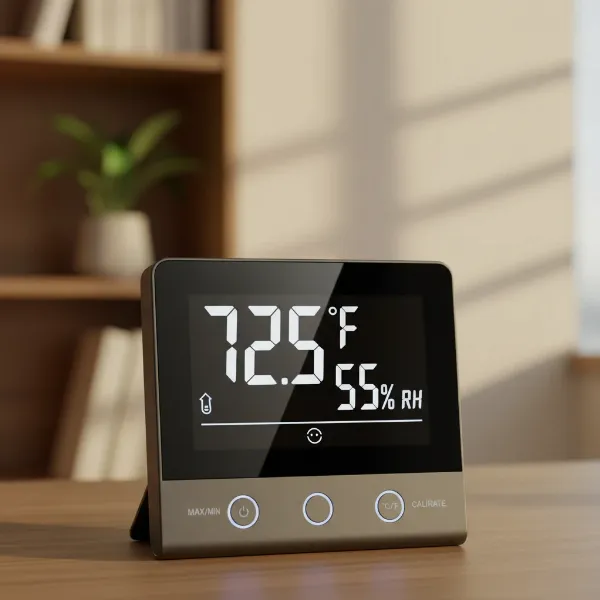 A digital hygrometer's display showing temperature, humidity, and comfort levels, alongside buttons for features.
Choosing the Right Device for Your Needs (Buying Guide)
Selecting the ideal environmental monitoring device requires careful consideration of your specific requirements and the environment you intend to monitor. Both digital hygrometers and liquid thermometers serve distinct purposes, and the “best” choice depends on your priorities.
Defining Your Monitoring Goals
The first step is to clarify what you need to measure. Do you primarily need to know the temperature, the humidity, or both?
- Temperature Only: If simple temperature readings are your sole concern (e.g., basic room temperature, cooking), a liquid thermometer might suffice, although digital thermometers offer more precision and readability.
- Humidity Only: If you only need to track humidity for a specific purpose (e.g., cigar humidor without a temperature display), a basic digital hygrometer is the right tool.
- Both Temperature and Humidity: For comprehensive environmental control, such as in living spaces, greenhouses, or storage areas for sensitive items, a digital thermo-hygrometer is highly recommended. These integrated devices provide a complete picture of your environment. Do you need historical data, alerts, or remote monitoring? These advanced needs point towards smart digital options.
Key Factors to Consider When Choosing
When evaluating digital hygrometers (especially those with integrated temperature sensors), several factors impact performance and suitability:
- Accuracy and Resolution: Look for devices with stated accuracy ranges (e.g., ±1-3% RH, ±0.5°F). Higher resolution (e.g., readings to one decimal place) offers more precise data. For critical applications, invest in higher accuracy models.
- Measurement Range: Ensure the device’s temperature and humidity ranges cover the conditions you expect to monitor. Standard indoor units cover typical home temperatures and humidity levels.
- Response Time: A faster refresh rate (e.g., every 10 seconds) means you get more real-time data, which is beneficial in dynamic environments.
- Display and Readability: Consider screen size, backlight options, and the clarity of digits. Larger, backlit displays are easier to read from a distance or in dim light.
- Advanced Features: Do you need min/max records, trend indicators, customizable alarms, data logging, or smart app connectivity? These features enhance monitoring capabilities and provide deeper insights.
- Power Source and Battery Life: Most digital units are battery-powered. Check the expected battery life and the type of batteries required for convenience.
- Placement Options: Look for features like kickstands for tabletops, magnetic backs for metal surfaces, or wall-mount holes for versatile placement.
- Brand Reputation and Reviews: Choose reputable brands known for quality and reliability. User reviews can offer practical insights into a product’s real-world performance.
Budget Considerations
Environmental monitoring devices come in a range of price points.
- Entry-Level (Under $15-20): You’ll find basic digital thermo-hygrometers that provide current temperature and humidity, sometimes with min/max. Liquid thermometers are also typically in this range.
- Mid-Range ($20-50): This segment offers improved accuracy, faster refresh rates, larger or touchscreen displays, and often includes Bluetooth connectivity for local remote monitoring and basic data logging.
- High-End ($50+): These devices typically feature superior accuracy, Wi-Fi connectivity for true remote monitoring, extensive data logging with cloud storage, integration with smart home ecosystems, and advanced sensor technology for specialized applications.
Your budget should align with your need for precision, features, and monitoring convenience.
How to Use and Maintain Your Digital Hygrometer
Proper use and maintenance are crucial for ensuring the accuracy and longevity of your digital hygrometer. While these devices are generally user-friendly, a few best practices can significantly enhance their performance.
Using Your Digital Hygrometer:
- Placement: Position your hygrometer in a central location within the area you wish to monitor. Avoid placing it near direct heat sources (radiators, windows with direct sunlight), vents (AC/heater), or areas with stagnant air, as these can lead to inaccurate readings. For room monitoring, a height of about 5 feet off the floor is often ideal.
- Acclimation: When first setting up a new hygrometer or moving it to a different environment, allow it to acclimate for at least 30 minutes to an hour (or longer in highly stable environments) before trusting the readings. This gives the sensors time to adjust to the new conditions.
- Understanding the Display: Familiarize yourself with the display. Most show current temperature and relative humidity. Look for indicators like comfort levels (dry, comfort, wet), min/max records, and trend arrows to get a complete picture.
- Utilizing Features: If your device has advanced features like alarms, data logging, or smart connectivity, take the time to set them up according to your needs. This can provide proactive alerts and valuable historical data.
Maintaining Your Digital Hygrometer:
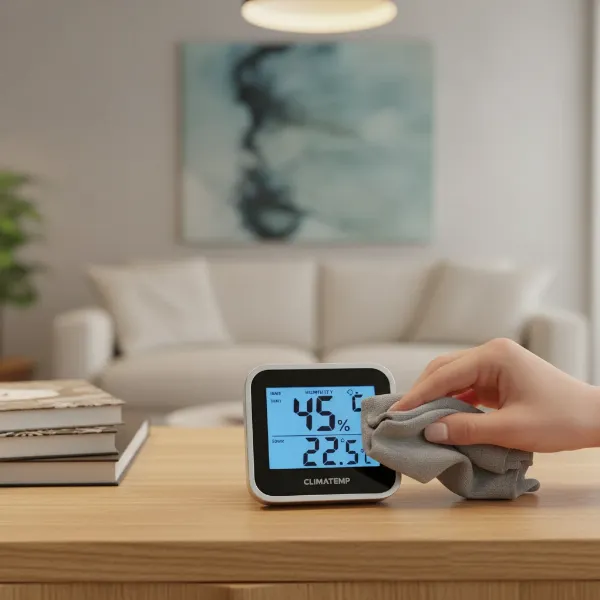
- Cleaning: Keep the device clean and free from dust or debris, especially around the sensor area. Use a soft, dry cloth; avoid harsh chemicals or excessive moisture, which can damage the electronics.
- Battery Replacement: Digital hygrometers rely on batteries. Replace them promptly when the low battery indicator appears to avoid interruption in monitoring and potential data loss. Use the recommended battery type.
- Calibration: While many digital hygrometers are factory-calibrated, their accuracy can drift over time. For critical applications, periodic calibration is recommended. A common method is the “salt test,” where the hygrometer is placed in a sealed container with a saturated salt solution (e.g., table salt and water) for several hours, which creates a known humidity level (typically 75% RH). If your device has a calibration function, adjust it to match this standard. If not, note the offset.
- Protection: Protect your hygrometer from extreme temperatures, high impacts, and direct exposure to water or prolonged high humidity (unless it’s designed for such conditions).
Common Issues and Troubleshooting
Even reliable digital hygrometers can occasionally present issues. Here are some common problems and their straightforward solutions:
-
Inaccurate or Inconsistent Readings:
- Cause: Poor placement, lack of acclimation, sensor contamination, or drift.
- Fix:
- Relocate the device away from drafts, heat sources, or direct sunlight.
- Allow sufficient time (e.g., 1 hour or more) for the device to acclimate to a new environment.
- Gently clean the sensor area if visible dust or debris is present.
- Perform a salt test calibration to check and adjust accuracy. If severely off, consider professional calibration or replacement.
-
Display Not Working or Fading:
- Cause: Low batteries, battery orientation issues, or electronic malfunction.
- Fix:
- Replace the batteries with fresh ones.
- Ensure batteries are inserted correctly according to polarity markings.
- If replacing batteries doesn’t work, try a different set of new batteries.
- If the issue persists, the display or internal electronics may be faulty, requiring repair or replacement.
-
No Data or Connectivity Issues (for Smart Hygrometers):
- Cause: Out of range, app not running, Bluetooth/Wi-Fi interference, or device not paired correctly.
- Fix:
- Move the hygrometer closer to your smartphone (for Bluetooth) or Wi-Fi router (for Wi-Fi models).
- Ensure the companion app is open and running in the background.
- Check for physical obstructions (thick walls, metal objects) that might interfere with the signal.
- Attempt to re-pair the device with your smartphone or reconfigure Wi-Fi settings through the app.
- Restart your smartphone or Wi-Fi router.
-
Slow Response Time:
- Cause: Generic models, sensor issues, or placement in a very stable environment.
- Fix:
- Ensure the hygrometer is in a location with adequate air circulation.
- Understand that basic models naturally have slower refresh rates. If real-time monitoring is critical, consider upgrading to a model with a faster response time.
By understanding these common troubleshooting steps, you can often resolve minor issues with your digital hygrometer and maintain reliable environmental monitoring.
Conclusion
The choice between a digital hygrometer and a liquid thermometer boils down to a fundamental question: what environmental factor do you primarily need to measure? While liquid thermometers offer a simple, passive solution for temperature, their utility ends there. For comprehensive environmental control, a digital hygrometer, especially one with integrated temperature sensing, is an invaluable tool. These modern devices provide precise, easy-to-read data on both humidity and temperature, often accompanied by smart features that enhance monitoring and enable proactive adjustments to your living or storage spaces. Investing in the right digital hygrometer allows you to safeguard your health, comfort, and possessions by maintaining optimal indoor conditions.
Are you effectively monitoring the true environmental health of your space?
Frequently Asked Questions
What is the primary difference between a digital hygrometer and a liquid thermometer?
The primary difference is their function: a digital hygrometer measures humidity (the amount of moisture in the air), while a liquid thermometer measures temperature (the degree of heat or cold). Many digital hygrometers include a temperature sensor, offering both readings in one device, whereas a liquid thermometer only measures temperature.
Can a liquid thermometer also measure humidity?
No, a traditional liquid-in-glass thermometer cannot measure humidity. Its design relies on the thermal expansion of a liquid to indicate temperature and lacks any mechanism to detect water vapor in the air. For humidity measurement, a hygrometer is required.
Are digital hygrometers more accurate than liquid thermometers?
When it comes to their respective primary functions, digital hygrometers often offer higher precision and faster response times for humidity, and when they include temperature sensors, they are generally more accurate and easier to read than liquid thermometers for temperature too.
Why is monitoring humidity important for indoor environments?
Monitoring humidity is crucial because both excessively high and low levels can negatively impact health, comfort, and property. High humidity can lead to mold and dust mites, while low humidity can cause skin and respiratory issues, and damage wood or electronics.
How often should I calibrate my digital hygrometer?
For general home use, calibrating your digital hygrometer once or twice a year is usually sufficient. For critical applications, such as in scientific labs, cigar humidors, or sensitive storage, more frequent calibration (e.g., quarterly) or professional calibration may be necessary to ensure optimal accuracy.